Vitamins are defined as a group of complex unrelated fat- and water-soluble organic compounds present in minute amounts in natural foodstuffs (NRC, 2007). There are a variety of B-vitamins, all of which are water-soluble, meaning that excess amounts are excreted through the urine. Not stored in the body.
What do B Vitamins do?
This group of vitamins plays critical roles in numerous body processes. B vitamins are important for energy metabolism, enzyme function, skin and coat health, neurological health, cellular communication, mood balance, and nervous system function.
Does My Horse Make Enough B Vitamins on Their Own?
B-vitamins are an interesting group of vitamins as the horse, to some extent, can rely on their own production. The process of microbial fermentation, occurring in the hindgut of the horse (large colon and cecum), produces b vitamins. Due to this, dietary deficiency is rare for horses, and in most cases, healthy horses maintained on high-quality forage do not need additional supplementation of b vitamins.
Vitamin
Primary Role
NRC Requirement
B1 – Thiamine
Carbohydrate metabolism, nerve function
Yes
B2 – Riboflavin
Energy metabolism, cellular function
Yes
B3 – Niacin
Energy metabolism, enzyme function
No
B5 – Pantothenic Acid
Energy metabolism
No
B6 – Pyridoxine
Protein metabolism, neurological function
No
B7 – Biotin
Hoof, skin, and coat health
No
B9 – Folate
Cellular communication, red blood cell production
No
B12 – Coblamin
Nervous system function, energy metabolism
No
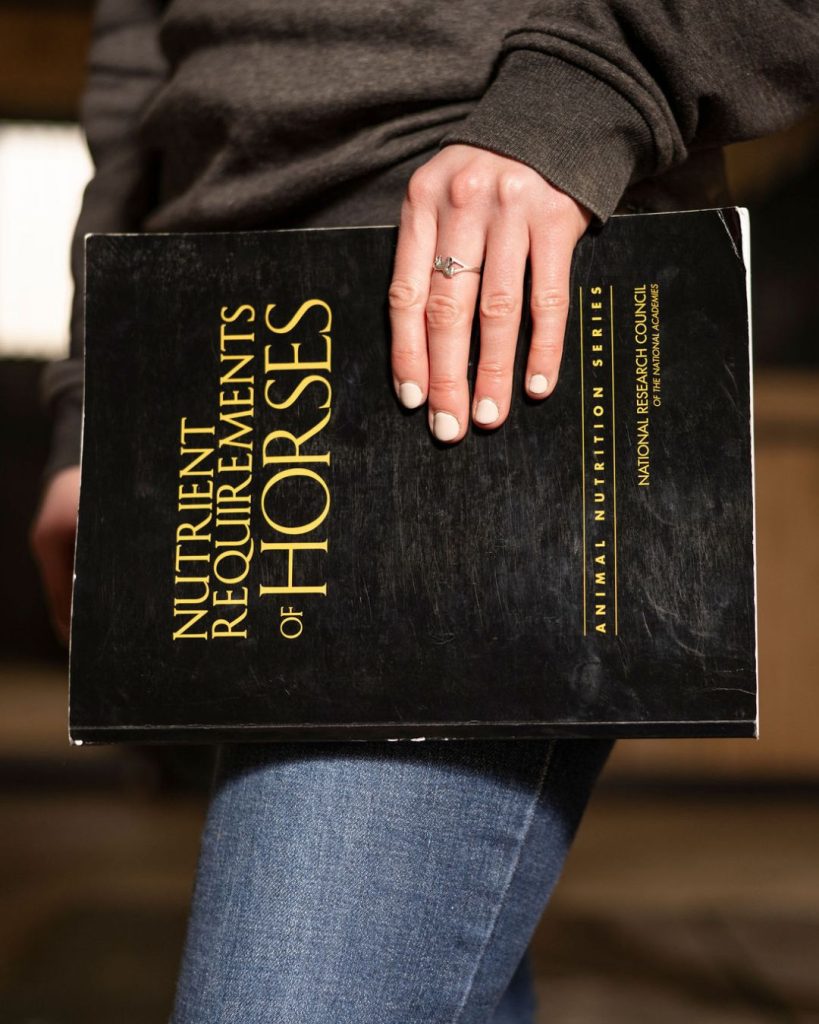
For the group of B vitamins (Thiamine – B1, Riboflavin – B2, Niacin – B3, Pantothenic acid – B5, Pyridoxine – B6, Biotin – B7, Folate – B9, and Cobalamin – B12), the Nutrient Requirements of Horses, only states a dietary requirement for thiamine and riboflavin. However, horses that are maintained on a normal ration with quality forage, and at minimum, a ration balancer or vitamin/mineral premix, should not need additional b vitamin supplementation.
When Might My Horse Need Supplementation?
It should be noted that although there are not established dietary requirements for many of the b vitamins, it does not mean that dietary supplementation is not advantageous. For healthy horses, supplementing biotin (vitamin B7), at a rate of 20 mg/day for a 500 kg horse, has been shown in many research studies to improve hoof health and growth rate. Additionally, there are numerous situations that do warrant supplementation with broad spectrum b vitamins.
The situations in which an additional source of b vitamins might be warranted are when horses are on diets consisting of large amounts of concentrates, maintained on low quality forage, are on broad spectrum antibiotics, have compromised digestive health, are under excessive stress or have diminished digestive efficiency. In these situations, working with a qualified nutritionist to determine if your horse might benefit from additional supplementation is recommended.
Best Sources of B Vitamins for Horses
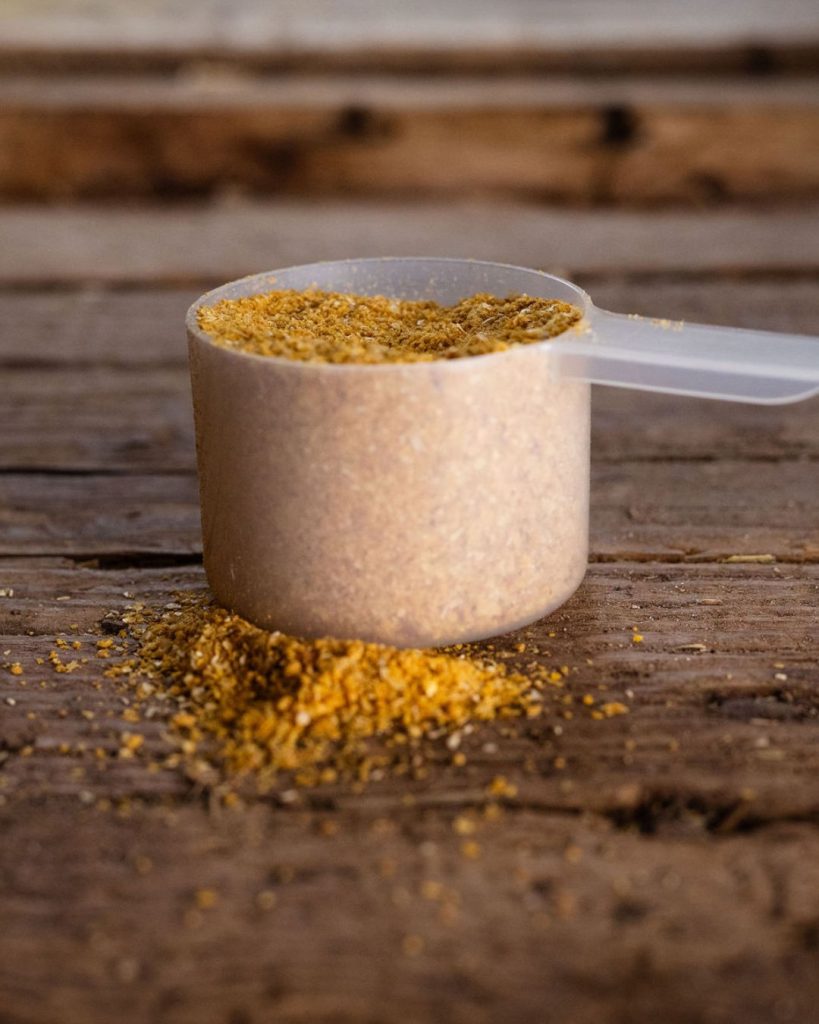
Beyond quality forage, brewer’s yeast is a commonly used source of b vitamins. There are also many commercial b vitamin supplements available. For these supplements, the vitamins are generally coated to improve stability. Many premixed feed will also include added b vitamin content.
Although dietary deficiency is rare in horses, there are certain toxicities that result in b vitamin deficiencies. For example, horses consuming Bracken Fern often present with a thiamine deficiency.
If your horse is healthy, and consuming a balanced diet with quality forage, then you do not need to supplement them with additional b vitamins. If digestive health is compromised, antibiotics are being used, or forage quality is low, an additional source of b vitamins might be beneficial.
Nutrient Requirements of Horses (2007). Chapter 6: Vitamins.
Reilly, J. D., Cottrell, D. F., Martin, R. J., & Cuddeford, D. J. (1998). Effect of supplementary dietary biotin on hoof growth and hoof growth rate in ponies: a controlled trial. Equine Veterinary Journal, 30(S26), 51-57.
Written by Madeline Boast
Madeline is an independent equine nutritionist and the founder of Balanced Bay. She holds a bachelor's degree in Equine Management and a master's degree in Equine Nutrition, both from the University of Guelph, along with a Professional Animal Scientist (PAS) designation, a hay sampling certification, and additional training in equine body condition scoring. Her graduate research focused on equine obesity and metabolic issues. Madeline works with horses of all types — from companion ponies to competitive sport horses — designing science-backed, forage-first nutrition plans with no brand affiliations or sales commissions involved.
Written by Madeline Boast
Madeline is an independent equine nutritionist and the founder of Balanced Bay. She holds a bachelor's degree in Equine Management and a master's degree in Equine Nutrition, both from the University of Guelph, along with a Professional Animal Scientist (PAS) designation, a hay sampling certification, and additional training in equine body condition scoring. Her graduate research focused on equine obesity and metabolic issues. Madeline works with horses of all types — from companion ponies to competitive sport horses — designing science-backed, forage-first nutrition plans with no brand affiliations or sales commissions involved.