Our preliminary work with a data mining study on Ontario hay shows that hay digestible energy content and equine workload are not aligned. Highlighting an area of nutritional management that could be improved.
As an equine nutritionist, when I consider the most common issues that owners contact me about, they tend to stem from the same management challenge – the hay does not match the horse’s nutritional requirements.
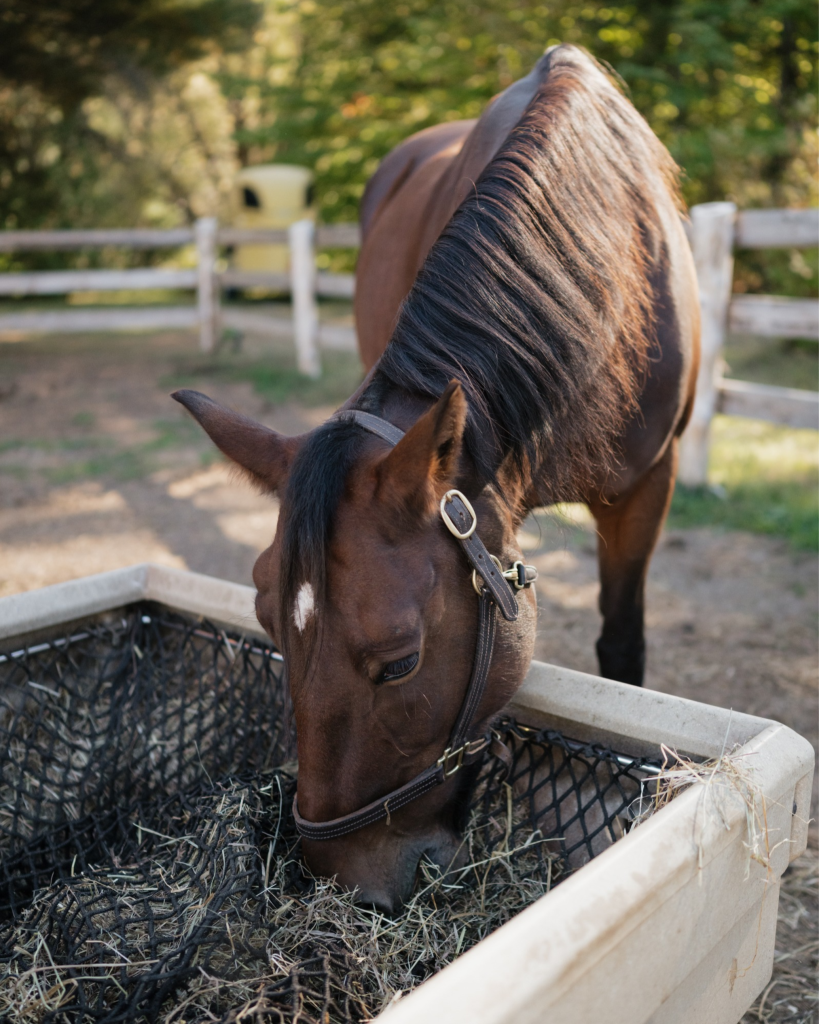
Hay generally comprises the majority of an equine ration, and feeding hay that does not align with a horse’s calorie requirements often leads to low-forage rations. Think about a performance horse fed low-calorie hay, they need more supplemental concentrates, resulting in less roughage intake. Or, what about the companion pony fed a moderate- calorie hay, they are fed a restricted amount to prevent obesity. Low-forage rations present numerous management challenges, negatively impact equine welfare and contribute to health issues.
As I had anecdotally realized this management issue was prevalent, I was curious to determine if it was a widespread issue that could be highlighted for a published research paper to encourage the industry to take a closer look at it.
This data-mining study evaluated variation of hay quality in Ontario, Canada, over 3-years, if there was a correlation between activity level of the horse and digestible energy (DE) content of the hay, and whether variations were biologically significant. Upon analyzing the data, no statistically significant correlation between the digestible energy (calorie) content of the hay, and the activity level of the horse was found (p = 0.205).
If we put this into an example, the DE values of the hay ranged from 1.55 – 2.71 Mcal/kg. For a 500 kg horse consuming 10 kg of hay, this represents a difference of 11.6 Mcal/day, a biologically meaningful variation, as there would be weight gain or loss elicited for the horse.
A study evaluating the relationship between DE and weight gain in Quarter horses concluded that feeding 160% of Maintenance DE requirements (National Research Council, 2007), elicits about 20 kg of weight gain over 42 days (Gill et al. 2017). A 500 kg horse with maintenance energy requirements (16.7 Mcal/day), consuming hay that has a DE content greater than 1.67 Mcal/kg, might gain excess weight. Additionally, if their hay is providing 2.6 Mcal/kg, which is not even at the top of the sampled range, they would be meeting the previously evaluated guidelines (Gill et al. 2017) to achieve 20 kg of weight gain over a 42-day period.
Current nutritional management strategies for equine obesity focus on feed restriction, and/or exercise (Garland et al. 2025). However, with the importance of foraging time for equine welfare, the DE content of the forage should be at the forefront of this conversation.
Beyond horses at maintenance or in light work that risk obesity when fed hay that does not match their DE requirements, performance horses, or hard keepers, must also be considered.
A 500 kg horse in heavy work requires 26.6 Mcal/day (National Research Council, 2007), if that horse was consuming 2% of their body weight of the hay with the average DE (2 Mcal/kg), they would require additional supplemental concentrates to provide 6.6 Mcal/day of DE. As the digestible energy content of the hay decreases, the reliance on concentrates increases to meet their energy demands, potentially contributing to the prevalence of gastrointestinal issues seen with low-forage rations.
No correlation between activity level and hay quality within the sampled population highlights an area to improve equine nutritional management. Over the next 6 months, we are hoping to add additional parameters to this data-mining study, so stay tuned for those findings.
I am excited to take this research to the International Conference of Equine Exercise Physiology in Tokyo next week and continue working towards supporting optimal nutritional management in horses!
A balanced diet consultation can help you figure out what’s actually missing from their diet with an optimal nutrition program curated with their individual nutritional requirements at the forefront. View the consultation options, or contact me to learn more.
By: Madeline Boast, MSc. Equine Nutrition, PAS
Disclaimer: this research is still in the process of being prepared for publication and therefore is not peer-reviewed.
Garland, A., van Doorn, D. A., van den Boom, R., Roelfsema, E., Jung, L., Boast, M., … & Pearson, W. (2025). Morphometric changes in overweight horses following 10-week weight loss programs. BMC Veterinary Research, 21(1), 596.
Gill, J. C., Lloyd, K. E., Bowman, M., Siciliano, P. D., & Pratt-Phillips, S. E. (2017). Relationships among digestible energy intake, body weight, and body condition in mature idle horses. Journal of Equine Veterinary Science, 54, 32-36.
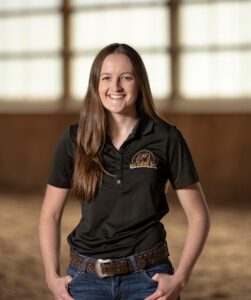
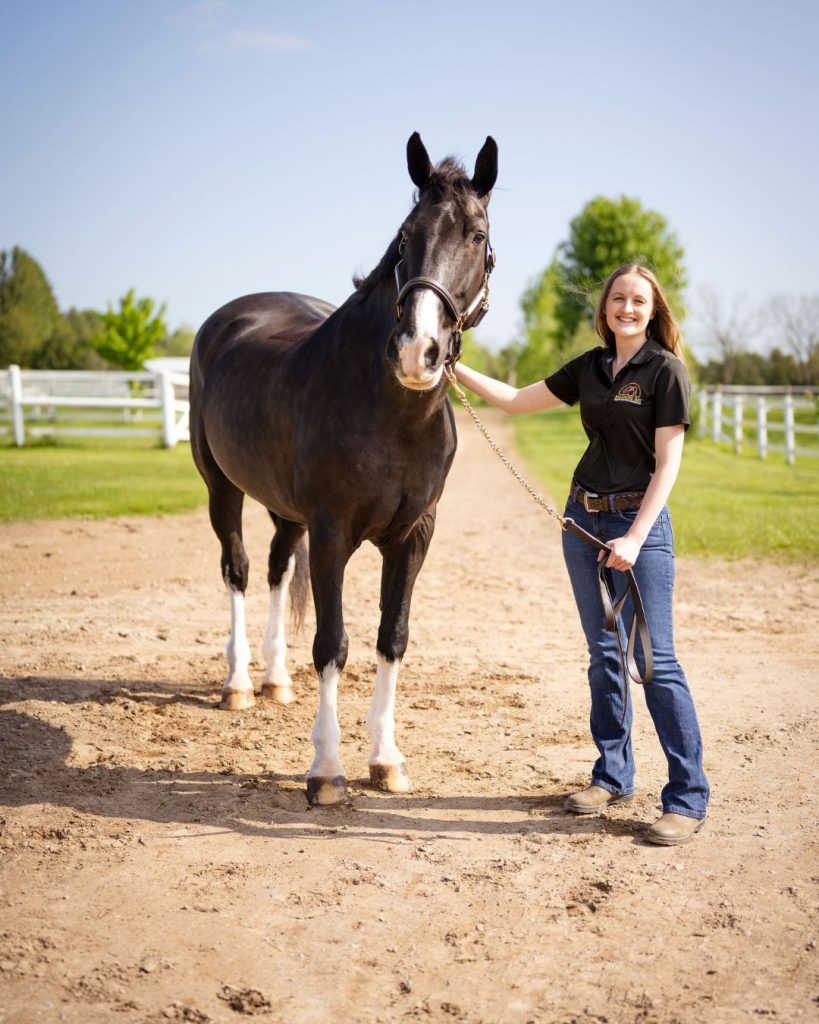
Madeline is an independent equine nutritionist and the founder of Balanced Bay. She holds a bachelor's degree in Equine Management and a master's degree in Equine Nutrition, both from the University of Guelph, along with a Professional Animal Scientist (PAS) designation, a hay sampling certification, and additional training in equine body condition scoring. Her graduate research focused on equine obesity and metabolic issues. Madeline works with horses of all types — from companion ponies to competitive sport horses — designing science-backed, forage-first nutrition plans with no brand affiliations or sales commissions involved.
Madeline is an independent equine nutritionist and the founder of Balanced Bay. She holds a bachelor's degree in Equine Management and a master's degree in Equine Nutrition, both from the University of Guelph, along with a Professional Animal Scientist (PAS) designation, a hay sampling certification, and additional training in equine body condition scoring. Her graduate research focused on equine obesity and metabolic issues. Madeline works with horses of all types — from companion ponies to competitive sport horses — designing science-backed, forage-first nutrition plans with no brand affiliations or sales commissions involved.