It is recommended to test your horse’s vitamin E levels once per year. This guides your decision on how much supplemental vitamin E to provide. Keep reading to learn when to add supplemental vitamin E to your horse’s ration.
Adequate vitamin E is essential for neuromuscular health. Fresh, healthy, and green pasture is a great source of this fat-soluble vitamin. However, with modern management practices, and a lack of pasture in many geographical areas, deficiency is common.
Vitamin E is an important antioxidant, when deficient, there is an increase in oxidative stress that negatively impacts health and performance. If the deficiency is left unaddressed for a prolonged period neuromuscular disorders such as equine degenerative myeloencephalopathy (EDM), equine neuroaxonal dystrophy (eNAD), and equine motor neuron disease might develop.
For horses to be consuming adequate vitamin E without additional supplementation, they should be housed on pasture for 12 hours a day, 6 months out of the year. This is unfortunately rare for many horses.
If your horse is on a quality ration balancer, vitamin/mineral premix or fortified commercial concentrate, they will be getting some additional vitamin E. However, the amount of vitamin E that a horse requires is individual. For example, you can have 10 horses with the exact same management, 3 might need an additional vitamin E supplement, while the other 7 have adequate levels.
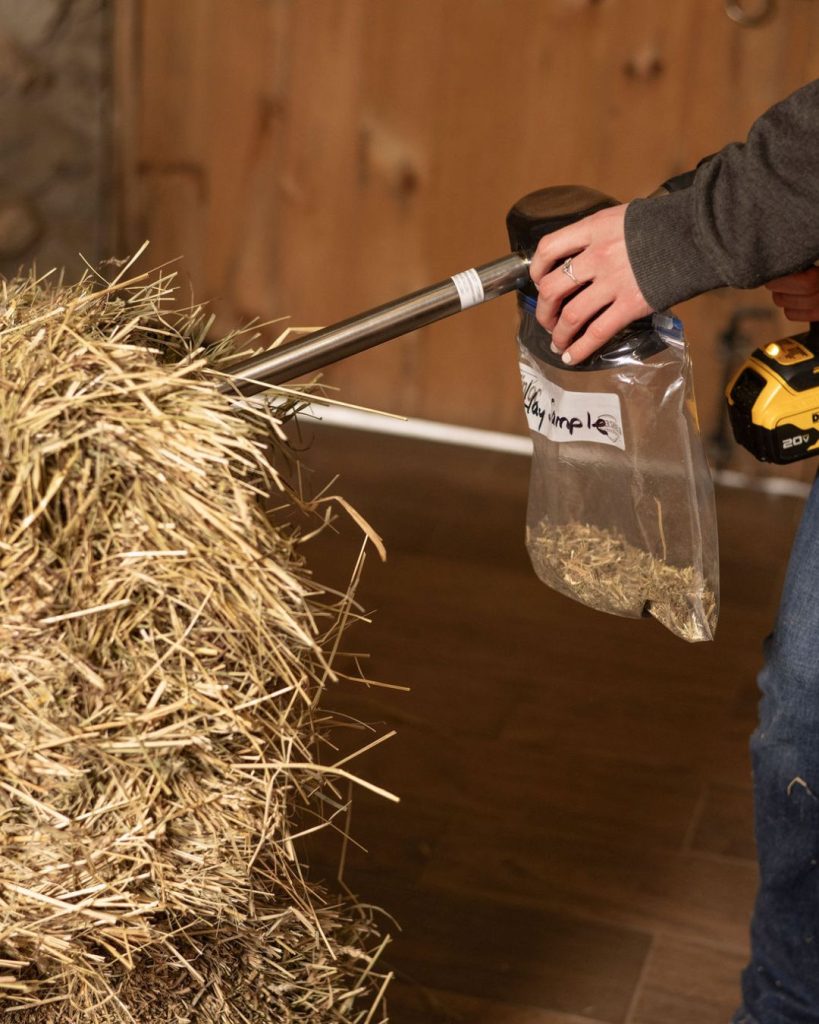
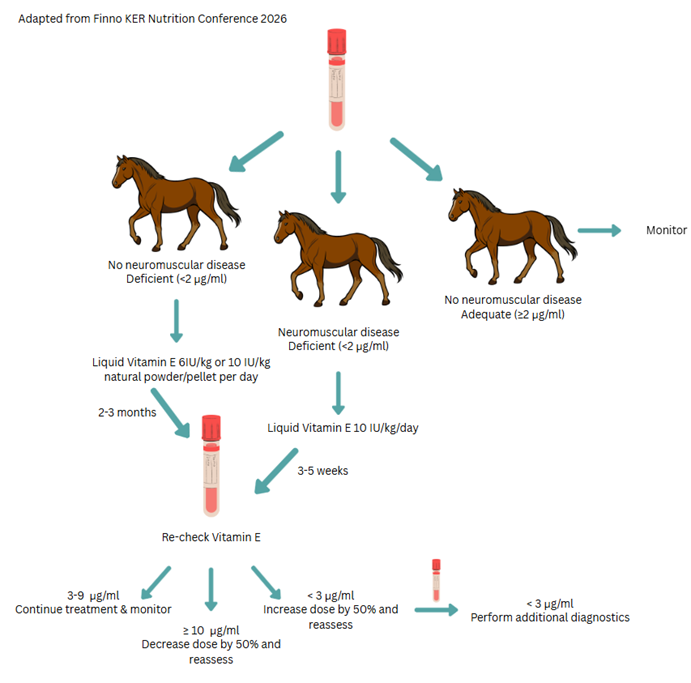
The ONLY way to know if your horse is receiving adequate vitamin E is through testing. Your veterinarian will take a blood sample to send to the laboratory. Most laboratories use the HPLC method and report results in µg/ml. The recommended reference range is 3-6 µg/ml, with ≥2 µg/ml being considered adequate.
Not all vitamin E supplements are created equally! There are a few different forms that differ in bioavailability. Synthetic vitamin E, also commonly listed as dl-alpha tocopheryl acetate, is not recommended for horses with a vitamin E deficiency as it takes a larger dose and a long time to effectively raise their serum levels.
Natural vitamin E is available in both a powder/pellet form (d-alpha-tocopheryl acetate), or a liquid (d-alpha-tocopherol or RRR-alpha-tocopherol). The powder/pellet supplements generally take 8-10 weeks to increase serum levels, while the liquid (water dispersible) form tends to increase serum levels in 2-3 days. The price of the product tends to reflect the efficacy of it, as the natural liquid vitamin E supplements are more costly than the natural powder/pellets. Although synthetic is a cheaper option, it is not recommended. A final consideration when choosing a vitamin E supplement is to investigate if the company has shown efficacy of their product.
How much to supplement, and what type, depends on numerous factors including the serum vitamin E level of the horse, and whether or not neuromuscular disease is present. Below is a flow chart adapted from Dr. Carrie Finno’s presentation at the 2026 KER Nutrition Conference. Dr. Carrie Finno, DVM, PhD, Dipl. ACVIM, is an associate professor in veterinary genetics at the University of California, Davis, and studies the interaction of vitamin E and neural development.
Now, as with most nutrients, more of a good thing is not always better – and everything in moderation! Vitamin E is a fat-soluble vitamin which will build up in the body when provided in excess. When too much vitamin E is present, it can interfere with both vitamin A and vitamin K resulting in bleeding disorders.
If your horse is on a balanced diet, they might not need a vitamin E supplement, and it is not recommended to blindly add vitamin E to your horse’s ration without testing their levels first.
Adequate vitamin E is critical to equine health, but it is not enough to simply provide them with the recommended dosage in the Nutrient Requirements of Horses (2007). The only way to ensure that your horse is getting adequate vitamin E is to have your veterinarian test them. Use the results of their vitamin E test to then guide your decision on if a supplement is required.
If you are looking for more information on how to test your horse’s vitamin E, or interpret the test results, please reach out to Madeline.
Finno, C. J., & Valberg, S. J. (2012). A comparative review of vitamin E and associated equine disorders. Journal of veterinary internal medicine, 26(6), 1251-1266.
Finno, C. J. (2026). KER Nutrition Conference Proceedings.