Hay testing is a practice that is fortunately gaining popularity. However, many owners are still confused about how and when to test. Let’s dive into hay testing, and how to better support our horse’s well-being with balanced nutrition.
A hay analysis involves taking samples of your horse’s hay – often from at least 10 different bales and sending it to a laboratory for analysis. This is the ONLY way to know the nutritional content of your horse’s hay.
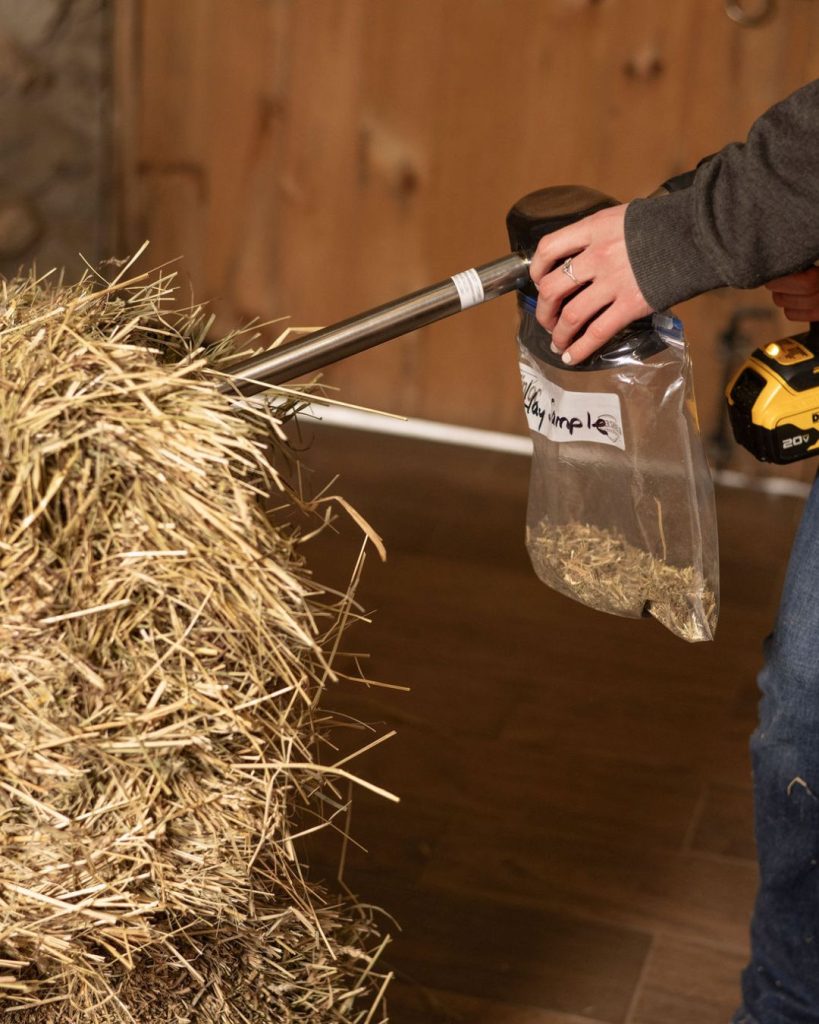
The gold standard is to take 10-20 samples using a corer. This method is more accurate than taking samples by hand as the tool takes a core through the entire bale. If you work with an equine nutritionist, they will be able to sample your hay for you, or your local feed store may have a corer available to rent if you’d like to do your own sampling.
If a corer is not available to you, you can use hand samples, however, there is a specific way to take them to promote accuracy. If you’re interested in these instructions, please email balancedbaynutrition@gmail.com to request them.
The investment for a hay analysis ranges from about $40-80 CAD, depending on the laboratory used and the nutrients included in the analysis. For example, a basic analysis that includes moisture, crude protein, calcium, phosphorus, starch and sugar, will be closer to the lower end of the price range, but if you opt for a full mineral panel that includes zinc, copper, and iron, the analysis fee increases.
Hay testing is the gold standard, and with hay often being 90%+ of a horse’s diet, it only makes sense to know the nutritional content. However, it isn’t always practical to do.
The general recommendation is that if you are getting hay shipments that last 3 or more months, you should be testing your hay. For smaller facilities that get a full year’s worth of hay at a time, it only makes sense to get it tested! If your horse is at a larger facility, and they are receiving new hay on a frequent basis (e.g., bi-weekly), testing is not practical. In these situations, your equine nutritionist will take that information into consideration when designing your horse’s program.
There are a multitude of reasons for testing hay, from safety for metabolic horses, to weight management, and even risk of impaction colic. Additionally, some owners will rely on the choosing hay based on if it is first or second cut, however this is not a reliable way to determine nutritional content.
The situation that most owners think about when it comes to hay testing is metabolic horses. If your horse has insulin dysregulation (ID), they should never be fed untested hay – it simply isn’t worth the risk. If their hay cannot be tested, soaking may need to be implemented.
Last year, I worked with a horse that had insulin dysregulation and struggled with obesity. He was housed at a boarding facility that had both first and second cut hay, they were feeding him the first cut hay as it tends to be lower in nutritional value. However, upon testing, the second cut hay was both lower in sugar and caloric content.
In 2024, much of the Ontario horse hay was harvested later in the season due to weather delaying harvesting. This meant that the hay was lower in nutritional value. The pattern that I observed through the fall months was significant weight loss for horses, and a greater incidence of impaction colic. One facility I was called to had 5 horses with impaction colic within the span of 2 weeks. The hay results showed extremely elevated levels of lignin – which is indigestible fibre. So, although starch and sugar content are at the forefront of reasons to test hay, understanding the digestibility of the forage is also critical.
A key note is that we are not testing hay to determine if it is ‘good’ or ‘bad’. We test hay to be equipped with the knowledge of its nutritional content so that your horse’s overall daily ration can meet their nutritional requirements. For example, if you test your hay and it is high in indigestible fibre, and lower in calories, we may simply add a supplemental fibre source such as alfalfa cubes to the ration while your horse is maintained on that forage.
So, don’t let the concern of ‘what if my hay is bad’, and ‘I can’t get rid of it, so why test it’ discourage you. Hay testing is done so that we know what to add to the horse’s ration to make their overall nutrition program as good as it can be!
Everyone is trying to do the best for their horse, so why not ensure you have accurate information to base your decisions off?
If you think about it, there is often a professional involved in every other aspect of our horse’s lives, from body workers, trainers, saddle fitters, farriers and of course, veterinarians, so why is nutritional management treated as a DIY project? Finding a qualified equine nutritionist to work with is a great way to support your horse’s well-being and prevent many nutritionally related health problems.
If you have any questions, feel free to reach out to Madeline.
By: Madeline Boast, MSc, PAS
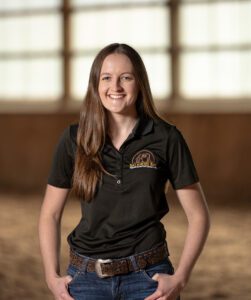
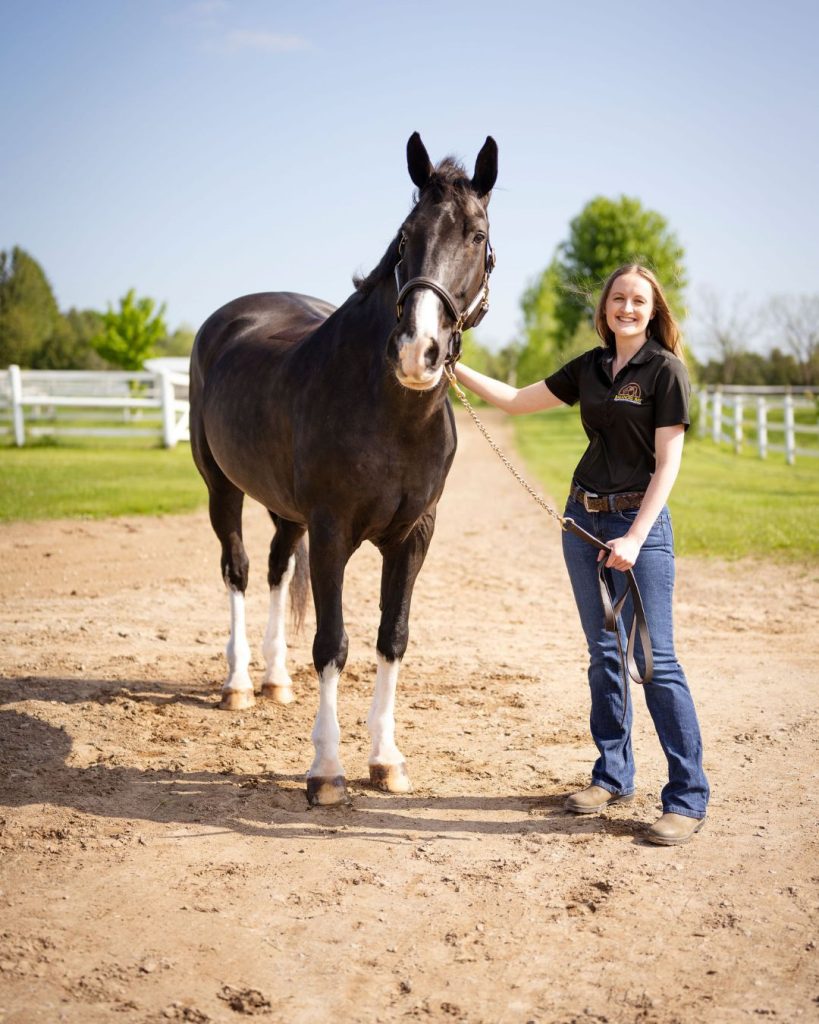
Madeline is an independent equine nutritionist and the founder of Balanced Bay. She holds a bachelor's degree in Equine Management and a master's degree in Equine Nutrition, both from the University of Guelph, along with a Professional Animal Scientist (PAS) designation, a hay sampling certification, and additional training in equine body condition scoring. Her graduate research focused on equine obesity and metabolic issues. Madeline works with horses of all types — from companion ponies to competitive sport horses — designing science-backed, forage-first nutrition plans with no brand affiliations or sales commissions involved.
Madeline is an independent equine nutritionist and the founder of Balanced Bay. She holds a bachelor's degree in Equine Management and a master's degree in Equine Nutrition, both from the University of Guelph, along with a Professional Animal Scientist (PAS) designation, a hay sampling certification, and additional training in equine body condition scoring. Her graduate research focused on equine obesity and metabolic issues. Madeline works with horses of all types — from companion ponies to competitive sport horses — designing science-backed, forage-first nutrition plans with no brand affiliations or sales commissions involved.